

British Prime Minister Keir Starmer has announced that he will step down as leader of the Labour Party, bringing to a close a turbulent period that saw his government struggle with declining public support despite its commanding election victory less than two years ago.
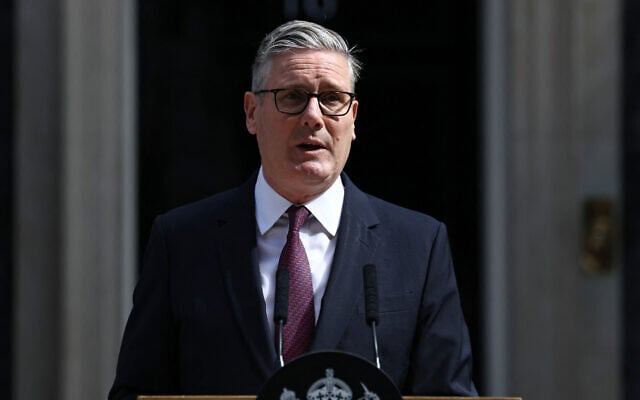
Speaking outside 10 Downing Street on Monday morning, an emotional Starmer said his decision was driven by what he believed was best for the country and the party. While he is relinquishing the Labour leadership, he confirmed that he will remain in office as caretaker prime minister until a successor is formally selected.
“Every decision I have taken has been about putting the country I love first. That is why I will resign as leader of the Labour Party,” Starmer said.
The announcement follows months of mounting political pressure and growing calls within Labour for a change in leadership. Although Starmer led the party to a landslide general election victory in July 2024, his administration has faced increasing challenges since taking power, with opinion polls showing a sharp decline in both his personal popularity and public confidence in the government.
His departure comes shortly after the victory of Andy Burnham in a special election last week. Burnham, one of Labour’s most recognizable figures and a longtime political heavyweight, had been widely expected to challenge Starmer for the party leadership, intensifying speculation about the prime minister’s future.
The resignation marks a significant turning point for British politics. Labour entered government with a substantial parliamentary majority and ambitious plans for economic and social reform, but the administration has struggled to maintain the momentum and public goodwill that followed its election success.
Attention is now expected to shift quickly toward the contest to replace Starmer. Senior Labour figures are likely to begin positioning themselves for the leadership race in the coming days, while party members and lawmakers weigh who is best placed to restore confidence ahead of future elections.
In the meantime, Starmer will continue carrying out the duties of prime minister until Labour completes the process of choosing a new leader. His temporary stay in office is intended to ensure continuity in government during what could be a closely watched and potentially divisive leadership contest.
The resignation opens a new chapter for Labour and raises fresh questions about the direction of the governing party, the future of its policy agenda and who will ultimately emerge as Britain’s next prime minister.