

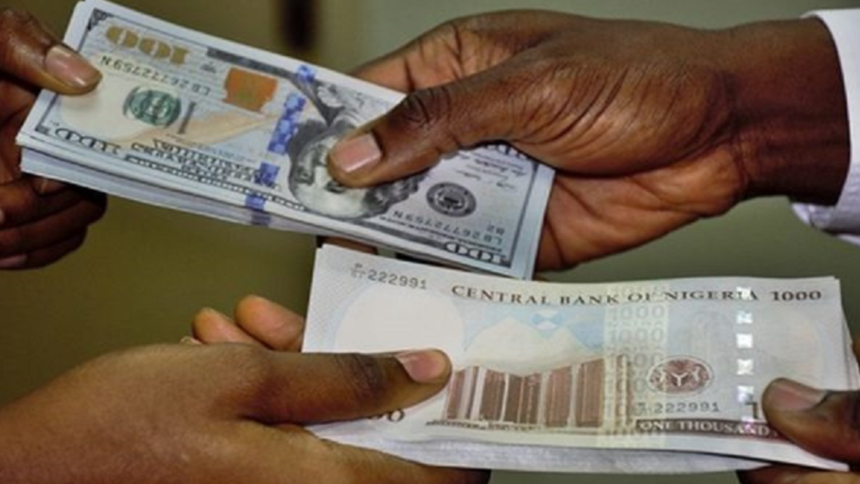
The naira has climbed to one of its strongest levels in nearly two years, closing at N1,347.78/$ in the official market on Monday, according to a macroeconomic update by CardinalStone.
So far this year, the currency has appreciated by 6.9 per cent in the official window, reflecting improved liquidity in the foreign exchange market.
However, a disparity persists between the official and parallel market rates. The parallel market had traded at a 5.7 per cent premium before narrowing to about 3.2 per cent after renewed foreign exchange interventions by the Central Bank of Nigeria (CBN).
CardinalStone said the shrinking spread signals stronger liquidity in the official market compared to the parallel segment.
Last week, the apex bank permitted licensed Bureau de Change (BDC) operators to purchase foreign exchange through authorised dealers at prevailing market rates. Each BDC can buy up to $150,000 weekly, subject to Know-Your-Customer requirements.
Operators must sell off unused balances within 24 hours to curb hoarding, while cash transactions are limited to 25 per cent of total trades, with settlements processed through licensed financial institutions.
With 82 licensed BDCs, potential monthly FX supply to the segment could reach roughly $50 million—far below the over $1 billion supplied monthly before the COVID-19 pandemic. CardinalStone said the lower volume reflects improved market conditions that have reduced speculative demand and redirected most corporate FX needs to the official window.
The renewed supply has nonetheless eased retail FX pressure and helped narrow the parallel market premium.
Analysts cautioned that sustained appreciation of the naira could lead foreign investors to rebalance their portfolios.
Nigeria’s carry trade remains attractive among emerging and frontier markets, drawing significant foreign portfolio investment (FPI) estimated at $12–$14 billion in outstanding positions.
If many 2025 inflows entered at around N1,500/$, a strengthening of the naira to between N1,200/$ and N1,250/$ could deliver currency gains of about 22.4 per cent. Such returns may increase the risk of portfolio outflows, particularly as political uncertainty rises ahead of the next general elections.